#CryptoMinersPivotToAIDC 🔥 Crypto Miners Pivot to AI Data Centers as Multi-Billion Dollar Deals Signal a Structural Shift from Bitcoin Mining to AI Compute Infrastructure 🔥
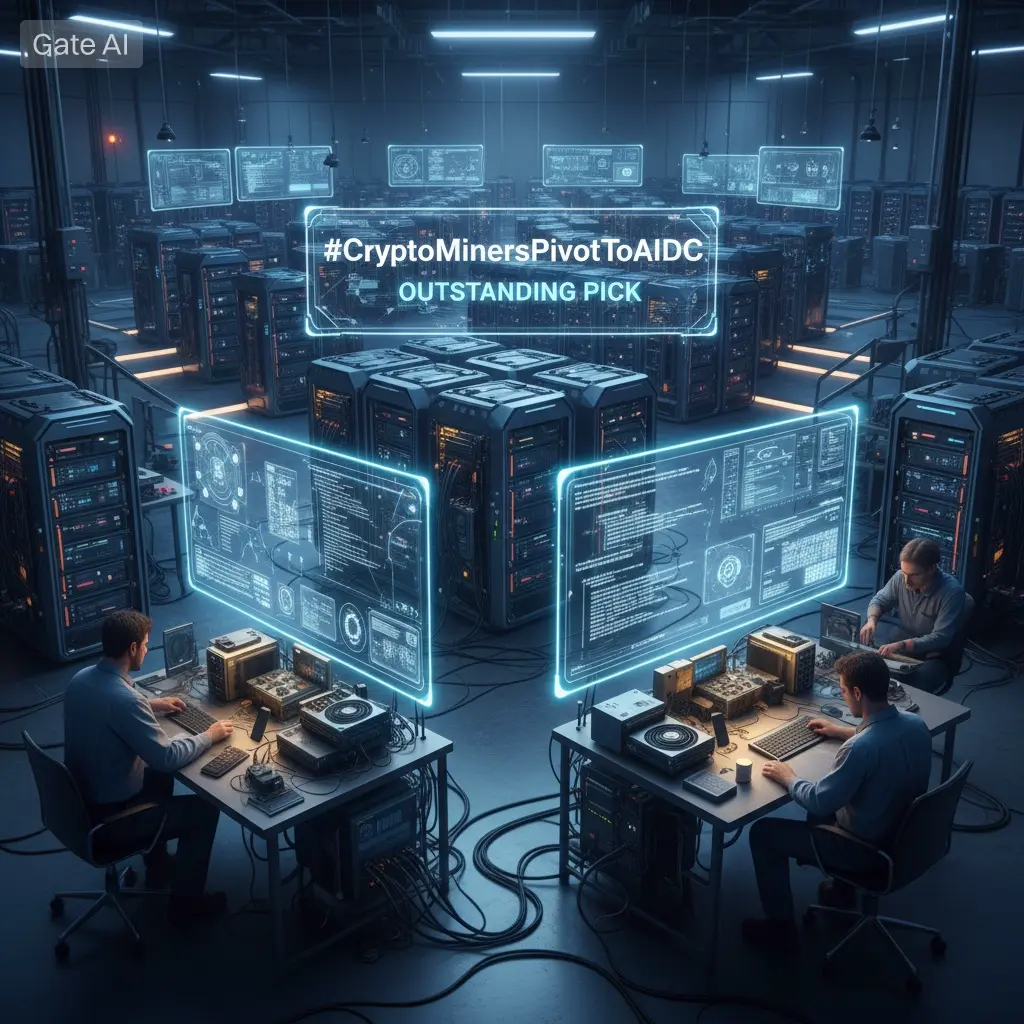
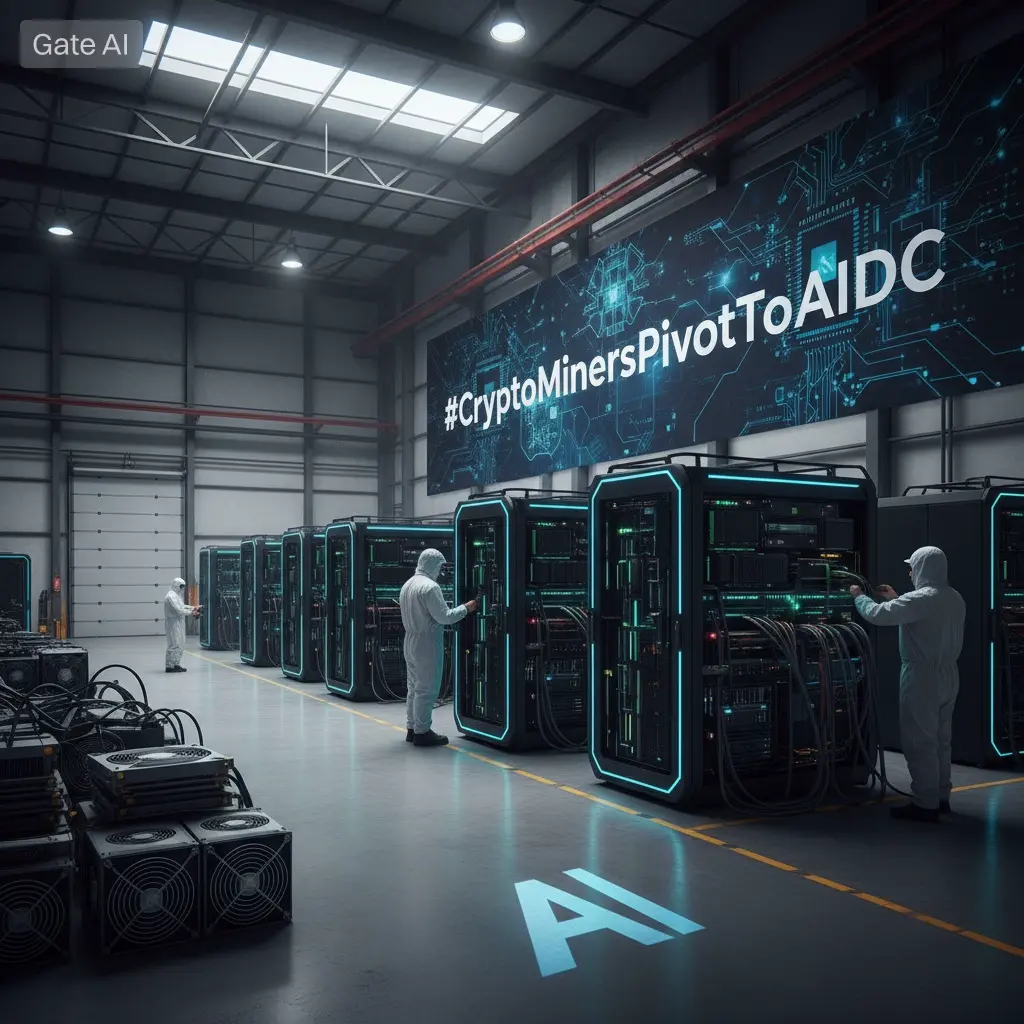
The crypto mining industry is undergoing one of the most important structural transitions since its inception. What was once a sector almost entirely dependent on Bitcoin mining rewards, energy arbitrage, and hash rate competition is now rapidly evolving into a broader compute infrastructure industry centered around artificial intelligence and high-performance computing demand.
Recent developments highlight this shift at scale. Major mining firms are no longer positioning themselves purely as crypto infrastructure operators. Instead, they are increasingly aligning themselves with AI data center expansion, GPU compute hosting, and long-term cloud computing contracts tied to artificial intelligence workloads. This transformation is not gradual in narrative alone, but increasingly backed by multi-billion dollar contractual commitments and long-duration partnerships.
---
The most notable example of this shift is Hut 8 finalizing a 15-year data center lease valued at approximately 9.8 billion US dollars. This type of long-term infrastructure commitment signals a fundamental repositioning of business strategy. Rather than relying solely on Bitcoin mining revenue cycles, companies are locking in predictable, long-duration cash flow models tied to enterprise-grade computing demand.
A lease of this scale also reflects confidence in sustained AI compute growth over the next decade. Unlike crypto mining, which is highly cyclical and dependent on block rewards and halving cycles, AI compute demand is structurally driven by global adoption of machine learning, large language models, automation systems, and enterprise cloud transformation.
This marks a clear evolution from speculative compute markets to contracted compute infrastructure economies.
---
Another major development reinforcing this trend is IREN signing a 3.4 billion US dollar AI cloud contract with Nvidia, alongside a 5 gigawatt strategic partnership. This is particularly significant because it represents direct alignment between crypto-native infrastructure providers and one of the most important companies in the global AI ecosystem.
Nvidia’s role in the AI industry is central due to its dominance in GPU hardware and compute acceleration technologies. By partnering with mining firms that already possess large-scale energy infrastructure, Nvidia effectively extends its reach into distributed data center expansion without needing to build all physical infrastructure from scratch.
For mining companies, this type of partnership represents a transition from commodity-based revenue (Bitcoin mining) to service-based revenue (AI compute leasing and cloud infrastructure services). This shift fundamentally changes business models, risk structures, and long-term valuation frameworks.
---
DMG Blockchain also launching a new AI subsidiary further reinforces this broader industry direction. Instead of remaining focused solely on blockchain validation and crypto mining operations, companies are now building parallel business units dedicated to artificial intelligence infrastructure, compute services, and enterprise cloud solutions.
This dual-structure approach suggests that mining firms are no longer treating AI as a side opportunity, but as a core strategic pillar for future survival and growth. As Bitcoin mining becomes increasingly competitive, energy-intensive, and margin-sensitive, diversification into AI compute becomes a logical evolution.
---
The broader reason behind this industry pivot is structural convergence between two previously separate domains: crypto mining infrastructure and AI compute demand.
Both industries rely heavily on three core resources: energy, hardware, and data center capacity. Crypto mining optimized for energy efficiency and hash computation, while AI workloads optimize for GPU throughput and parallel processing capacity. Despite differences in purpose, both require large-scale industrial infrastructure, making mining facilities naturally compatible for repurposing.
As AI demand accelerates globally, the value of compute infrastructure has increased dramatically. Data centers are no longer just storage and hosting facilities; they are now strategic assets powering global AI development, automation systems, and enterprise digital transformation.
This has created a situation where existing mining infrastructure, especially large-scale energy-optimized facilities, becomes highly attractive for conversion into AI compute hubs.
---
Another key factor driving this shift is increasing competition within Bitcoin mining itself.
Over time, Bitcoin mining has become more industrialized, with higher difficulty levels, stronger competition, and more capital-intensive requirements. Margins are increasingly compressed, especially for mid-tier operators that cannot compete with the largest industrial-scale mining farms.
At the same time, Bitcoin reward cycles and halving events create periodic revenue shocks that make long-term financial planning more difficult. This volatility has encouraged mining companies to explore more stable revenue streams that are less dependent on crypto market cycles.
AI compute infrastructure, by contrast, offers longer-term contracts, enterprise demand stability, and predictable revenue streams based on usage rather than token incentives.
---
Nvidia’s role in this transition cannot be understated.
As the dominant provider of AI GPUs and compute architecture, Nvidia effectively sits at the center of global AI infrastructure development. Its expansion into partnerships with large-scale infrastructure providers signals a shift toward distributed AI compute ecosystems rather than centralized hyperscaler-only models.
By collaborating with crypto mining firms that already control large energy footprints and industrial-scale facilities, Nvidia gains access to rapid infrastructure scaling without needing to build physical capacity from the ground up.
This creates a powerful alignment between hardware providers and infrastructure operators, accelerating the transformation of mining companies into AI data center operators.
---
From a macro perspective, this transition represents a broader convergence of three major sectors: energy infrastructure, blockchain computation, and artificial intelligence.
Energy remains the foundational constraint for both mining and AI computing. Large-scale data centers require massive and stable energy supply. Mining firms have historically optimized for energy procurement and distribution, giving them a natural advantage in this evolving landscape.
Blockchain computation, once the primary use case for these facilities, is gradually being replaced or supplemented by AI workloads that offer higher long-term revenue potential.
Artificial intelligence acts as the demand engine driving this transformation. As AI adoption expands across industries such as healthcare, finance, logistics, and software development, the need for scalable compute infrastructure continues to grow exponentially.
---
The long-term implication of this shift is that crypto mining companies may no longer be viewed purely as digital asset infrastructure operators. Instead, they are increasingly becoming hybrid compute infrastructure providers operating at the intersection of blockchain, AI, and high-performance computing.
This reclassification has important implications for valuation models, investor expectations, and industry categorization. Companies that were once evaluated based on Bitcoin production efficiency are now being evaluated based on data center capacity, AI compute contracts, and enterprise partnerships.
---
Another important dimension is capital flow restructuring.
Traditional mining revenue was heavily dependent on crypto market cycles, which created volatile cash flow structures. AI infrastructure contracts, however, introduce longer-duration revenue visibility, often spanning multiple years or even decades. This fundamentally changes risk profiles and investment attractiveness.
As more mining companies secure AI-related contracts, capital markets may begin to re-rate the entire sector, not as crypto mining equities, but as AI infrastructure assets.
---
At the same time, this transition does not mean the end of Bitcoin mining. Instead, it suggests a dual-track model emerging across the industry.
Some companies will continue focusing on Bitcoin mining as their core business, especially those with low-cost energy access and highly efficient operations. Others will increasingly diversify into AI compute, using mining infrastructure as a foundation for broader cloud and data center services.
This dual structure may define the next phase of the industry, where Bitcoin mining and AI computing coexist within the same operational ecosystem.
---
From a strategic standpoint, this evolution reflects a broader trend in global technology infrastructure.
The world is moving toward compute scarcity rather than compute abundance. Whether it is AI model training, large-scale inference, or blockchain validation, demand for computational resources continues to grow faster than supply. This imbalance creates long-term opportunities for infrastructure providers that can scale efficiently.
Crypto miners, with their existing energy contracts, modular data center designs, and hardware expertise, are well positioned to participate in this shift.
---
In conclusion, the pivot of crypto miners toward AI data centers represents more than a business diversification strategy. It signals a structural transformation of an entire industry.
What began as a niche sector focused on Bitcoin mining is evolving into a foundational layer of global compute infrastructure. As AI demand accelerates and digital economies expand, the boundaries between crypto mining, cloud computing, and artificial intelligence infrastructure are increasingly dissolving.
This convergence is likely to define the next decade of technological infrastructure development, where energy, computation, and intelligence systems become deeply interconnected across global markets.