#CryptoMinersPivotToAIDC
#CryptoMinersPivotToAIDC — The Massive Shift Reshaping Crypto Infrastructure
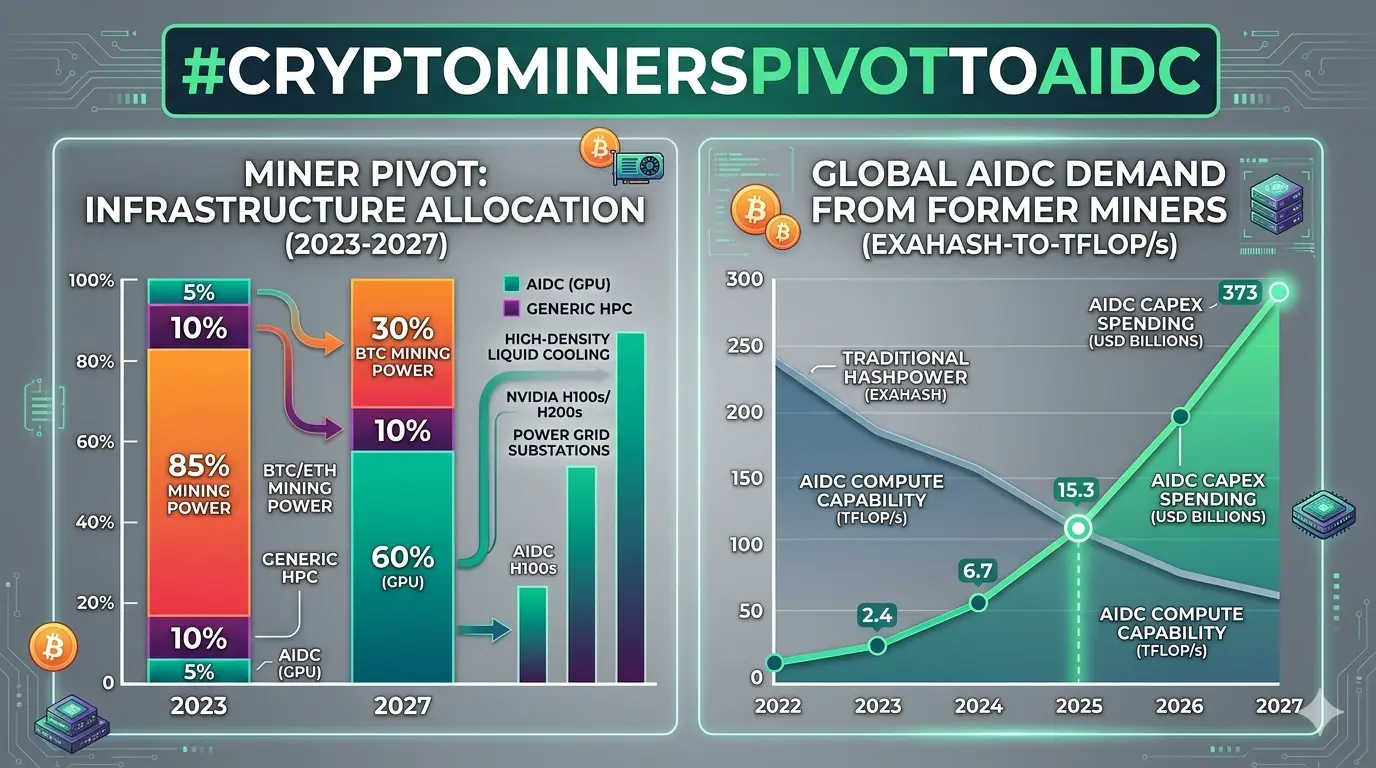
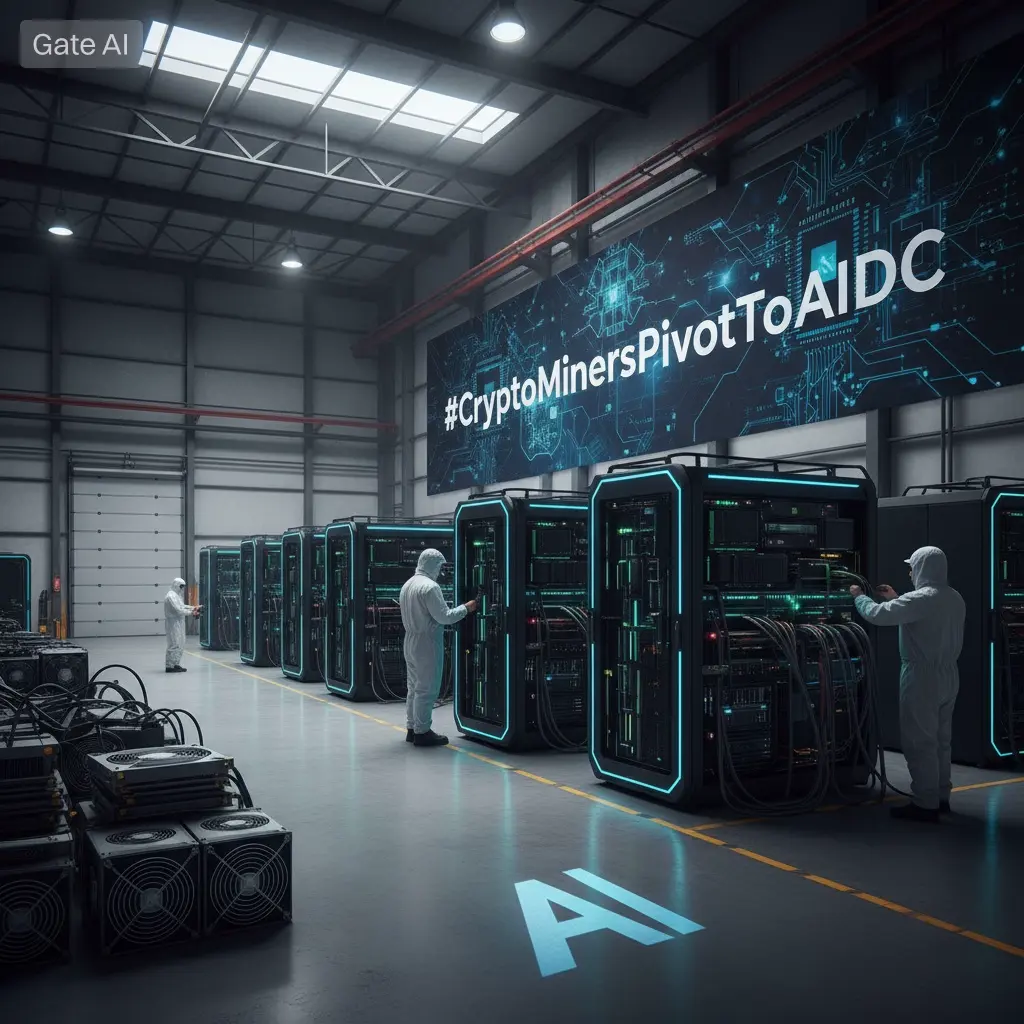
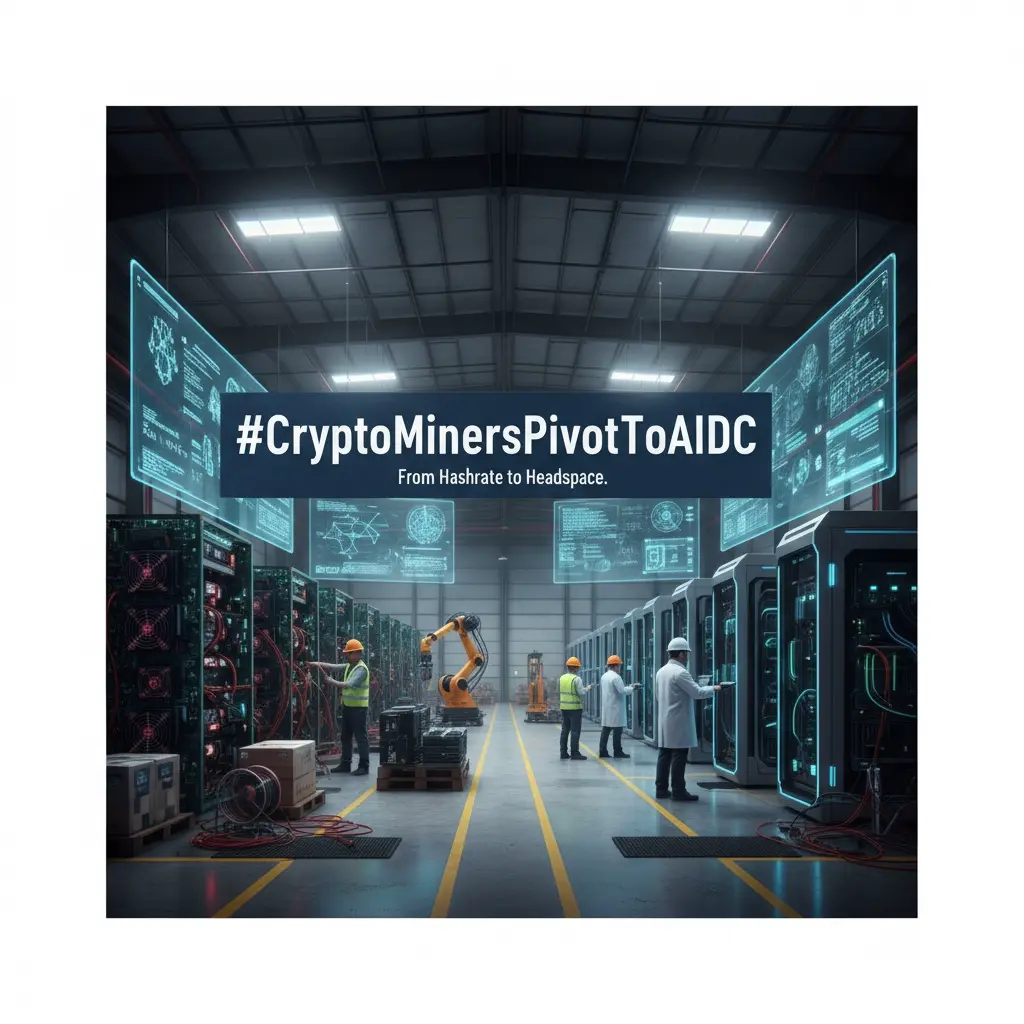
A major transformation is unfolding across the digital asset industry as cryptocurrency mining companies increasingly pivot toward AI data centers (AIDC). What began as a side strategy for a few mining firms has rapidly evolved into one of the biggest structural shifts in the entire crypto infrastructure sector.
For years, Bitcoin miners focused almost entirely on generating revenue through block rewards and transaction fees. But after multiple mining difficulty increases, rising energy costs, tighter margins, and post-halving profitability pressure, many miners discovered that their most valuable asset was not necessarily Bitcoin production itself — it was access to large-scale power infrastructure.
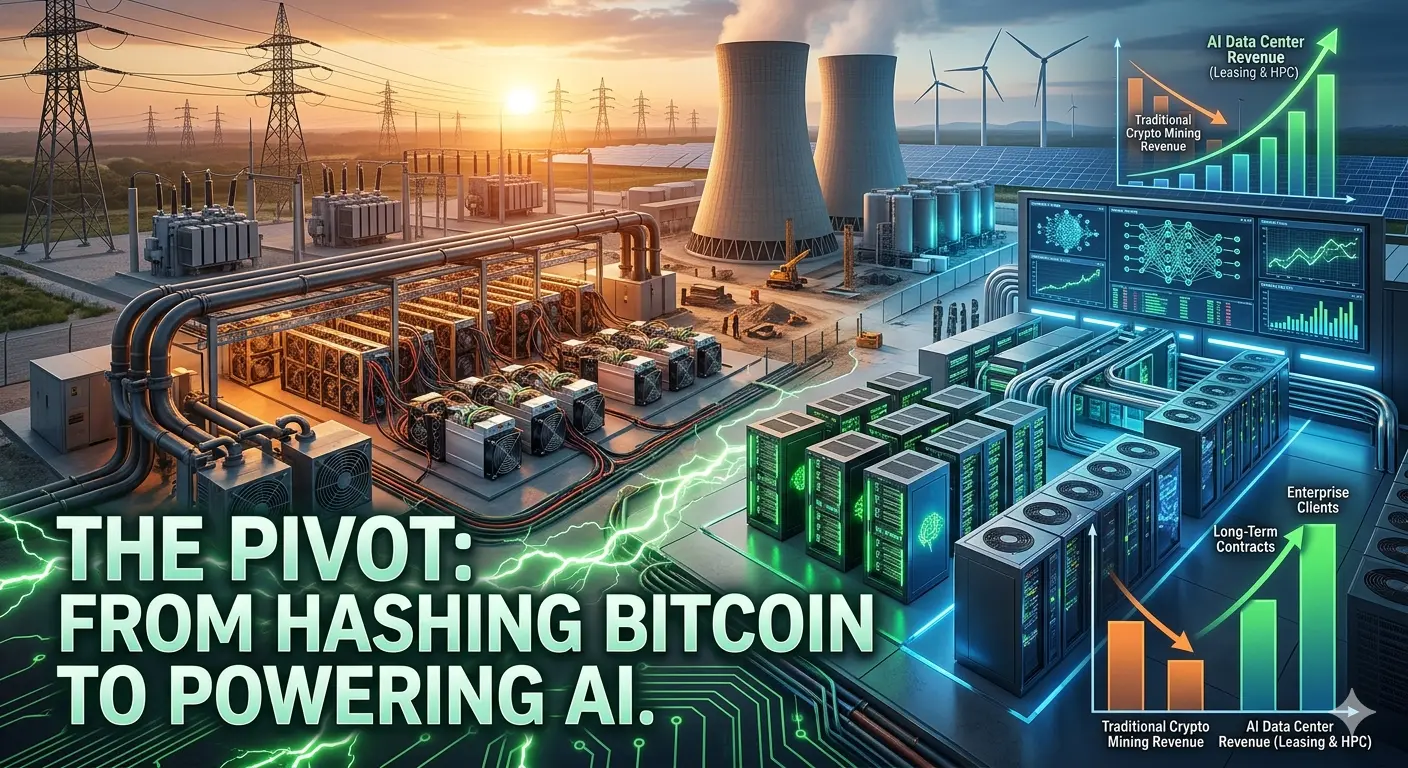
Now, many mining firms are repurposing their energy-heavy facilities into AI and high-performance computing (HPC) data centers designed to support artificial intelligence model training and cloud compute demand.
---
📊 Why Crypto Miners Are Pivoting Toward AI
The AI industry is currently experiencing explosive infrastructure demand.
Large AI models require:
Massive GPU clusters
High electrical capacity
Advanced cooling systems
Scalable data center infrastructure
Interestingly, Bitcoin miners already possess many of these capabilities:
Industrial-scale power access
Existing data center facilities
Cooling infrastructure
Energy management expertise
Large land footprints near power grids
This creates a natural transition path from mining operations to AI compute hosting.
---
⚡ The Economics Are Changing Fast
Traditional crypto mining revenues are highly volatile because they depend on:
Bitcoin price movements
Network difficulty
Energy costs
Halving cycles
AI infrastructure, however, offers:
Long-term leasing contracts
More predictable revenue streams
Higher margins in some cases
Enterprise-level clients
Several reports now project that some public miners could generate nearly 70% of their revenue from AI infrastructure by the end of 2026.
That statistic alone highlights how dramatically the business model is evolving.
---
🏛 Major Mining Companies Are Already Moving
Multiple large crypto mining firms are aggressively expanding into AI infrastructure:
Hut 8 signed a massive long-term AI data center lease agreement in Texas worth nearly $10 billion.
IREN expanded AI infrastructure operations through acquisitions and Nvidia-related partnerships.
TeraWulf is building AI-focused data center campuses with hyperscale partnerships.
Core Scientific increasingly shifted toward AI hosting and HPC operations.
Bitfarms announced plans to fully transition toward AI data center operations over time.
The market increasingly views these firms not simply as “Bitcoin miners,” but as future AI infrastructure providers.
---
📈 Why Investors Are Excited
Wall Street is reacting strongly because AI infrastructure is currently one of the hottest sectors globally.
Investors see several advantages:
AI demand is exploding faster than infrastructure supply
Power access has become extremely valuable
Existing miners already control critical energy assets
AI clients often sign multi-year contracts
As a result, some former mining firms have seen major valuation increases after announcing AI expansion strategies.
Markets are beginning to value:
megawatt capacity,
grid connectivity,
and cooling infrastructure
almost as highly as crypto mining hashrate itself.
---
🔄 The Bitcoin Mining Industry Is Splitting
The sector is now dividing into two categories:
🔹 Pure Bitcoin Mining Operators
These companies continue focusing mainly on BTC production and treasury accumulation.
🔹 Hybrid AI Infrastructure Firms
These firms are transitioning toward:
AI hosting
GPU cloud services
HPC infrastructure
enterprise compute leasing
Some companies may eventually reduce Bitcoin mining significantly if AI revenues continue outperforming mining profitability.
---
🧠 Why Power Infrastructure Is the Real Asset
The AI boom has revealed a major truth:
The scarcest resource is no longer just GPUs — it is electrical power availability.
AI facilities consume enormous amounts of electricity, and building new power-connected data centers takes years.
Crypto miners already solved many of those infrastructure problems long ago because Bitcoin mining itself required:
cheap electricity,
industrial zoning,
and scalable energy operations.
That early infrastructure investment is now becoming extremely valuable in the AI era.
---
⚠ Risks Still Exist
Despite the excitement, the transition is not risk-free.
Major challenges include:
Extremely high capital expenditures
GPU supply constraints
Construction delays
Grid stability concerns
Dependence on AI demand growth
Competition from hyperscalers
Some analysts also warn that AI infrastructure enthusiasm could become overheated if projected demand slows in future years.
---
🚀 The Bigger Picture
This shift represents something much larger than miners changing business models.
It reflects the merging of:
blockchain infrastructure,
AI compute demand,
energy markets,
and digital industrialization.
Crypto mining companies accidentally built exactly the kind of infrastructure the AI revolution now desperately needs.
What once powered Bitcoin transactions may increasingly power:
AI training models,
enterprise cloud systems,
machine learning infrastructure,
and next-generation digital economies.
The “Crypto Miner” may soon evolve into something entirely different: **an AI infrastructure operator built on the foundations of the blockchain era.**
#CryptoMinersPivotToAIDC — The Massive Shift Reshaping Crypto Infrastructure
A major transformation is unfolding across the digital asset industry as cryptocurrency mining companies increasingly pivot toward AI data centers (AIDC). What began as a side strategy for a few mining firms has rapidly evolved into one of the biggest structural shifts in the entire crypto infrastructure sector.
For years, Bitcoin miners focused almost entirely on generating revenue through block rewards and transaction fees. But after multiple mining difficulty increases, rising energy costs, tighter margins, and post-halving profitability pressure, many miners discovered that their most valuable asset was not necessarily Bitcoin production itself — it was access to large-scale power infrastructure.
Now, many mining firms are repurposing their energy-heavy facilities into AI and high-performance computing (HPC) data centers designed to support artificial intelligence model training and cloud compute demand.
---
📊 Why Crypto Miners Are Pivoting Toward AI
The AI industry is currently experiencing explosive infrastructure demand.
Large AI models require:
Massive GPU clusters
High electrical capacity
Advanced cooling systems
Scalable data center infrastructure
Interestingly, Bitcoin miners already possess many of these capabilities:
Industrial-scale power access
Existing data center facilities
Cooling infrastructure
Energy management expertise
Large land footprints near power grids
This creates a natural transition path from mining operations to AI compute hosting.
---
⚡ The Economics Are Changing Fast
Traditional crypto mining revenues are highly volatile because they depend on:
Bitcoin price movements
Network difficulty
Energy costs
Halving cycles
AI infrastructure, however, offers:
Long-term leasing contracts
More predictable revenue streams
Higher margins in some cases
Enterprise-level clients
Several reports now project that some public miners could generate nearly 70% of their revenue from AI infrastructure by the end of 2026.
That statistic alone highlights how dramatically the business model is evolving.
---
🏛 Major Mining Companies Are Already Moving
Multiple large crypto mining firms are aggressively expanding into AI infrastructure:
Hut 8 signed a massive long-term AI data center lease agreement in Texas worth nearly $10 billion.
IREN expanded AI infrastructure operations through acquisitions and Nvidia-related partnerships.
TeraWulf is building AI-focused data center campuses with hyperscale partnerships.
Core Scientific increasingly shifted toward AI hosting and HPC operations.
Bitfarms announced plans to fully transition toward AI data center operations over time.
The market increasingly views these firms not simply as “Bitcoin miners,” but as future AI infrastructure providers.
---
📈 Why Investors Are Excited
Wall Street is reacting strongly because AI infrastructure is currently one of the hottest sectors globally.
Investors see several advantages:
AI demand is exploding faster than infrastructure supply
Power access has become extremely valuable
Existing miners already control critical energy assets
AI clients often sign multi-year contracts
As a result, some former mining firms have seen major valuation increases after announcing AI expansion strategies.
Markets are beginning to value:
megawatt capacity,
grid connectivity,
and cooling infrastructure
almost as highly as crypto mining hashrate itself.
---
🔄 The Bitcoin Mining Industry Is Splitting
The sector is now dividing into two categories:
🔹 Pure Bitcoin Mining Operators
These companies continue focusing mainly on BTC production and treasury accumulation.
🔹 Hybrid AI Infrastructure Firms
These firms are transitioning toward:
AI hosting
GPU cloud services
HPC infrastructure
enterprise compute leasing
Some companies may eventually reduce Bitcoin mining significantly if AI revenues continue outperforming mining profitability.
---
🧠 Why Power Infrastructure Is the Real Asset
The AI boom has revealed a major truth:
The scarcest resource is no longer just GPUs — it is electrical power availability.
AI facilities consume enormous amounts of electricity, and building new power-connected data centers takes years.
Crypto miners already solved many of those infrastructure problems long ago because Bitcoin mining itself required:
cheap electricity,
industrial zoning,
and scalable energy operations.
That early infrastructure investment is now becoming extremely valuable in the AI era.
---
⚠ Risks Still Exist
Despite the excitement, the transition is not risk-free.
Major challenges include:
Extremely high capital expenditures
GPU supply constraints
Construction delays
Grid stability concerns
Dependence on AI demand growth
Competition from hyperscalers
Some analysts also warn that AI infrastructure enthusiasm could become overheated if projected demand slows in future years.
---
🚀 The Bigger Picture
This shift represents something much larger than miners changing business models.
It reflects the merging of:
blockchain infrastructure,
AI compute demand,
energy markets,
and digital industrialization.
Crypto mining companies accidentally built exactly the kind of infrastructure the AI revolution now desperately needs.
What once powered Bitcoin transactions may increasingly power:
AI training models,
enterprise cloud systems,
machine learning infrastructure,
and next-generation digital economies.
The “Crypto Miner” may soon evolve into something entirely different: **an AI infrastructure operator built on the foundations of the blockchain era.**