When users search for how to play Axie Infinity, they're usually looking for a clear understanding of what to do after entering the game, how earning works, and how NFT assets fit into the game economy. Since Axie Infinity integrates gameplay, NFT trading, and token incentives, a complete understanding requires looking at both player actions and system mechanics.
This topic typically covers essential aspects such as acquiring Axie characters, the battle system, earning mechanisms, NFT trading, and reward allocation.
Axie Infinity Gameplay Overview: From NFT Characters to Earning Pathways
Axie Infinity’s gameplay starts with Axie NFT characters and builds an earning cycle through battles, character development, and asset trading.
Players first set up a wallet and acquire Axie characters. Next, they use these characters to join various game modes, including adventure, competitive play, or other battle formats. The system then issues rewards based on player performance and game rules. Finally, players can choose to develop their characters further, trade NFT assets, or explore other features within the ecosystem.
| Process Step |
Player Action |
System Mechanism |
Outcome |
| Acquire Character |
Buy or obtain an Axie |
NFT ownership verification |
Game access granted |
| Participate in Battle |
Use Axie in combat |
Battle rule calculation |
Match result determined |
| Earn Rewards |
Complete tasks or win battles |
Reward distribution |
Receive tokens or resources |
| Asset Trading |
Sell NFTs or tokens |
Marketplace matching |
Asset liquidity achieved |
| Revenue Distribution |
Claim earnings per rules |
System settlement |
Value returned |
This structure means players are not just performing in-game actions—they’re participating in a blockchain-based game economy built on NFT assets and token rewards.
How Players Acquire Axie NFT Characters
Axie characters are the core assets in Axie Infinity, essential for engaging in battles and development systems.
Each Axie is an NFT with its own attributes, appearance, skills, and rarity. Once a player acquires an Axie, they have on-chain ownership, enabling gameplay use or marketplace transfer.
Players first need to create or connect a compatible wallet for the Axie ecosystem. Then, Axie NFTs can be obtained through the official marketplace or other supported platforms. The character enters the player’s account and becomes usable in-game. Players can then form teams based on attributes and pursue battles or character development.
What’s important here is that an Axie is not just an ordinary in-game item, but a verifiable, transferable on-chain asset. Players maintain direct control over their Axies—an important distinction between Axie Infinity and traditional games.
How the Axie Battle System Works
Axie Infinity’s battle system is built around character attributes, skill combos, and strategic choices.
Players create strategies using their Axies’ attributes, skill cards, and team compositions. Each Axie has unique abilities, and outcomes depend on both individual strength and team synergy as well as player decisions.
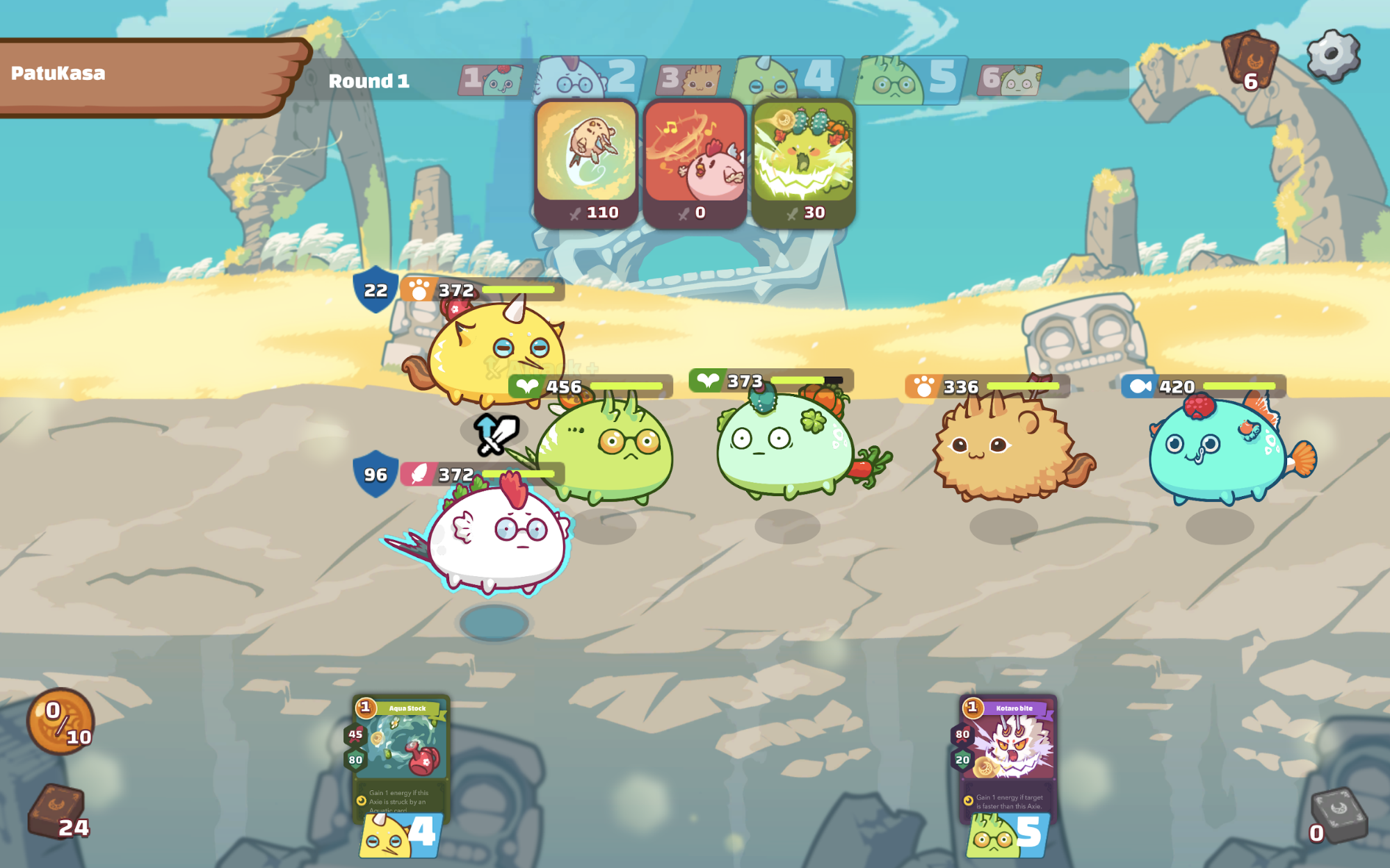
Players select a team for battle, and the system matches opponents or generates levels based on battle rules. During combat, players use skills and make tactical decisions each turn. The system then determines the result and distributes rewards accordingly.
The battle system serves two key roles: it delivers the core gameplay experience and forms the basis for reward allocation. When battle performance impacts rewards, player actions directly affect earnings.
Ultimately, the battle system shapes both the fun and the resource flow of the game economy.
How Earnings Are Generated in Axie Infinity
Players earn in Axie Infinity through game rewards, NFT asset trading, and ecosystem participation.
Returns aren’t arbitrary—they’re determined by the interaction between player actions and system rules. Completing battles, tasks, or activities can yield tokens or game resources. Players who own in-demand Axie NFTs can also realize value through trading.
Players generate results via battles or tasks. The system then distributes rewards according to set rules. Rewards can be used for breeding, upgrades, trading, or further game participation. Ultimately, earnings take the form of tokens, NFTs, or marketplace proceeds.
The core of this earning mechanism is the linkage between gameplay, asset supply and demand, and tokenomics. If game demand drops, asset and reward values may also decline.
Understanding earnings means paying attention to gameplay performance, the NFT market, and the token economy.
How NFT Assets Are Traded and Monetized
In Axie Infinity, asset trading centers on Axie NFTs, game resources, and associated tokens.
Players can sell their Axie characters on the marketplace, with pricing determined by rarity, attributes, skill sets, and market demand. Other game resources or tokens can also be traded on supported platforms.
Players list assets on the marketplace; buyers choose based on price and characteristics. When a trade is completed, asset ownership transfers, and sellers receive the corresponding tokens or assets.
NFT trading gives game assets liquidity. Players aren’t limited to in-game use—they can adjust their holdings or exit the market based on demand.
This dynamic sets Axie Infinity’s asset economy apart from traditional games, but it also means player earnings are subject to market volatility.
How Earnings Are Distributed Between Players and the Ecosystem
Earnings in Axie Infinity are distributed among players, the marketplace, the protocol itself, and ecosystem participants.
Players earn through gameplay and asset trading, the marketplace provides liquidity, and the protocol sustains the ecosystem via fees. Value generated in each stage is passed among players, asset holders, stakers, and other ecosystem actors.
Players first engage in the game to generate assets or rewards. These assets then move to trading or utilization. The system collects fees or distributes rewards as per rules. Finally, returns circulate between players and ecosystem stakeholders.
This revenue-sharing structure depends on a continuously operating economic cycle. Sustained player engagement, active asset trading, and token utility are all essential for distribution.
Earnings distribution is not just about rewards—it reflects the overall health of the blockchain game economy.
Summary
Axie Infinity’s gameplay involves acquiring Axie NFTs, battling, earning rewards, trading assets, and sharing in the resulting value. Players are not just game participants but also NFT asset holders and contributors to the in-game economy. Understanding how to play Axie Infinity means understanding the interplay between game mechanics, on-chain assets, and token rewards.
FAQ
How do you play Axie Infinity?
Players typically start by acquiring Axie NFT characters, then participate in battles, complete tasks, or trade assets. Earnings come from rewards, NFT trading, and ecosystem participation.
What is an Axie character?
An Axie character is the game’s core NFT asset, with unique attributes, skills, and on-chain ownership. Players use Axies in battle or trade them in the marketplace.
Where do Axie Infinity earnings come from?
Earnings mainly come from game rewards, NFT asset trading, and related ecosystem mechanisms. Actual returns depend on player actions, asset demand, and the token economy.
Can Axie NFTs be traded?
Yes. Axie NFTs are tradable in the marketplace, with prices driven by attributes, rarity, skill combos, and market demand.
Is Axie Infinity good for beginners?
Beginners can get involved step-by-step by learning about wallets, Axie characters, battle rules, and asset trading. Since NFTs and tokens are involved, understanding the core mechanics is essential.